Camera Fundamental Learning Part 1
Understanding Aperture (and Why It Matters)
I’ve always believed that photography is meant to be shared. Over the years, I’ve learned that the biggest growth
doesn’t come from fancy gear — it comes from understanding your camera and paying attention to the small
details that most people overlook. I want to help others truly experience their camera — learning the ins and
outs, the settings, the light, and the little things that end up making the biggest difference in an image.
In this first post, I’m focusing on aperture — what it is, how it works, and why it matters so much.
Aperture is one of those camera settings that can completely change the look and feel of an image once you
understand it. It plays a huge role in depth of field, background blur, sharpness, and even how much light your
camera lets in.
There’s something powerful about watching someone go from feeling unsure behind the camera to confidently
creating images they’re proud of.
That moment when it finally clicks — that’s why photography education matters to me.
Aperture Basics
Aperture is one of the most important camera settings to understand — and once it clicks, it can completely change the way you photograph.
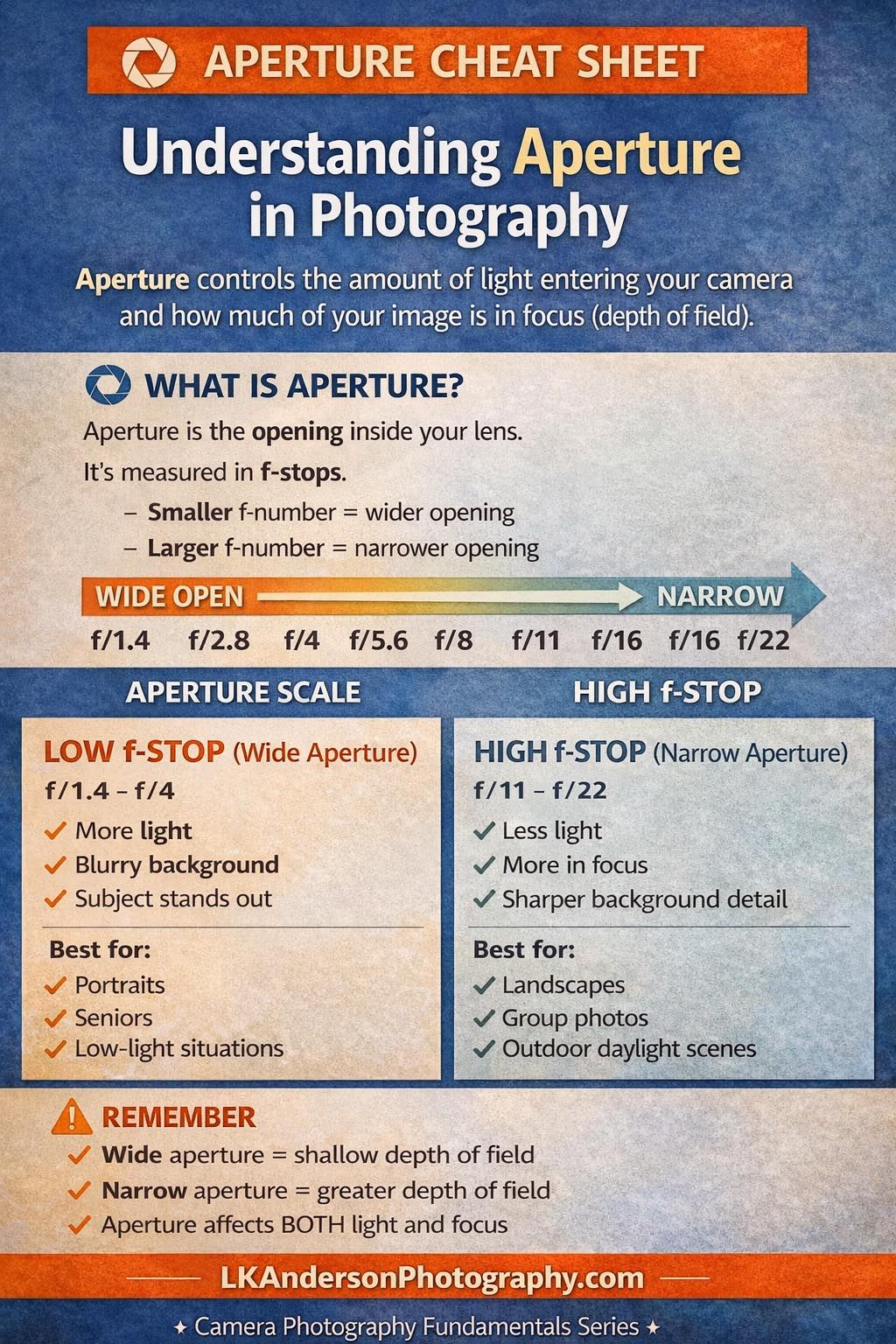
Simply put, aperture controls how much light enters your camera and how much of your image is in focus. Think of aperture like your eye.
In bright light, your pupil gets smaller. In low light, it opens wider to let more light in. Your camera works the same way.Aperture is measured
in f-stops, such as f/1.8, f/2.8, f/5.6, f/8, and so on. This is where things can feel confusing at first, but stick with it — it’s worth it.
Wide Aperture vs. Narrow Aperture
Wide aperture (small f-number, like f/1.8 or f/2.8)
Lets in more light. Creates a blurred background (shallow depth of field)
Great for portraits, seniors, details, and low-light situations
Narrow aperture (large f-number, like f/8 or f/11)
Lets in less light
Keeps more of the image in focus
Great for group shots, sports teams, and scenes where multiple subjects need to be sharp
** One of the biggest mistakes I see is photographers using a wide aperture all the time without thinking about what needs to be in focus.
Aperture should always be a choice, not an accident.**
Depth of Field: What’s Sharp and What’s Not
Aperture directly affects depth of field, which is how much of your image appears sharp from front to back.
A wide aperture gives you a shallow depth of field — your subject pops, the background melts away, and distractions disappear.
A narrow aperture gives you a deeper depth of field — more faces, jerseys, or details stay sharp.
This is especially important when photographing people. If you’re shooting a single subject, a wide aperture can be beautiful. \
If you’re shooting a group, too wide of an aperture can leave some faces soft or out of focus.
Aperture and Light
Aperture also controls light. A wider aperture allows more light into your camera, which is helpful in gyms, indoor events, or
evening sessions. A smaller aperture lets in less light, which can be useful outdoors in bright sunlight.
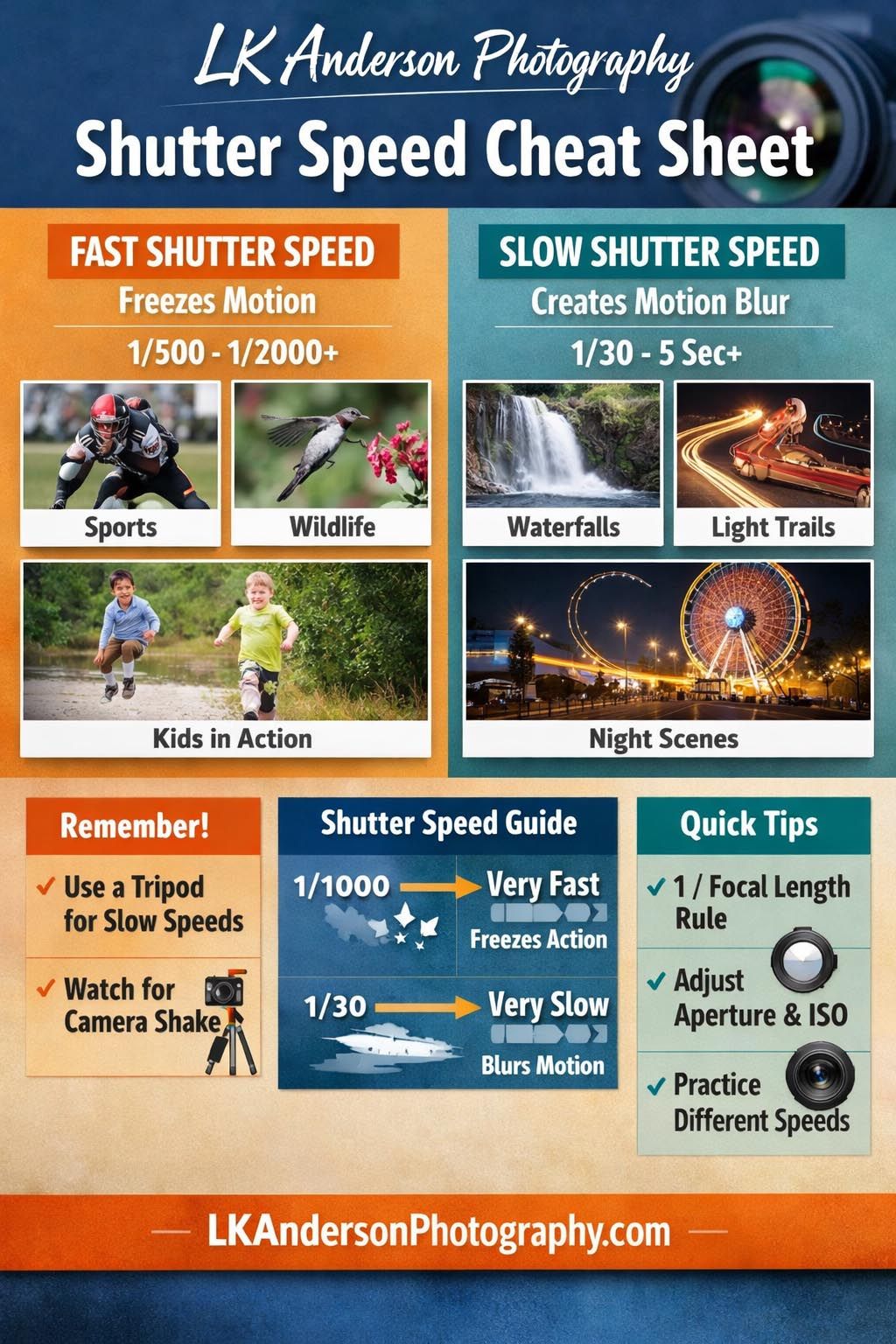
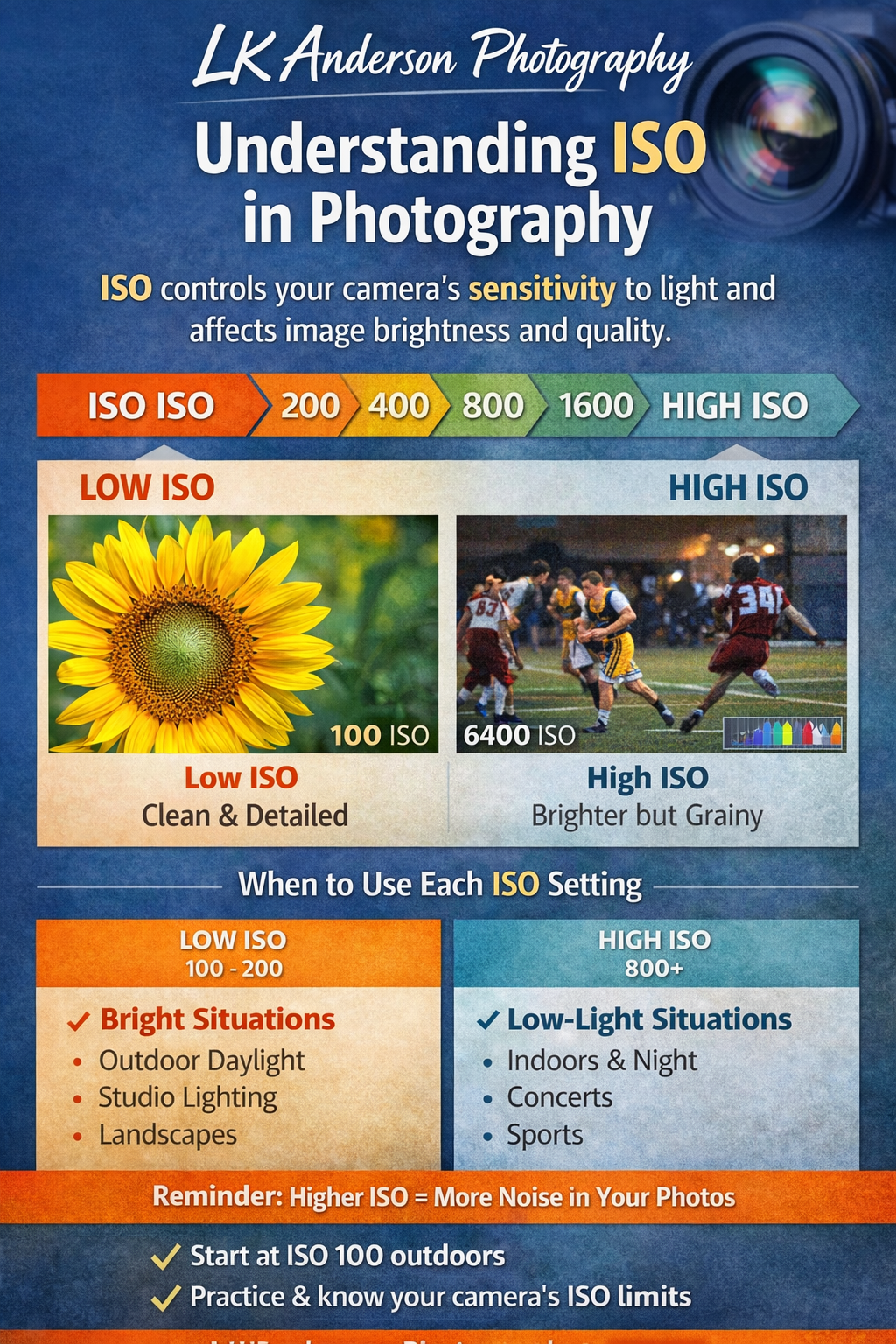
Changing aperture means you’ll often need to adjust shutter speed or ISO to keep your exposure balanced — and that’s
where everything starts working together.
Real-World Examples
- Senior portraits: Wide aperture to blur the background and draw attention to the face
- Sports banners or team photos: Narrower aperture to keep the subject sharp and clear
- Action sports: Aperture choice depends on light, distance, and how much of the athlete you want in focus
- There is no “one perfect setting.” The right aperture depends on the moment, the subject, and the story you want to tell.
Try This: Practice Exercise
Grab your camera and try this simple exercise:
- Find a subject (a person, chair, or object).
- Take one photo at f/2.8.
- Take the same photo at f/5.6.
- Take one more at f/8.
- Compare them side by side.
Notice how the background changes, how much stays in focus, and how the overall image feels. This is one of the
fastest ways to truly understand aperture.
Why Aperture Is a Game Changer
Once you understand aperture, you stop guessing and start creating with intention. You gain control over what your
viewer notices first. You decide what stands out and what fades away.
Aperture isn’t just a technical setting — it’s a creative tool.