Camera Fundamental Learning Part 3
Setting Your ISO
(How it Affects Light, Grain, and Image Quality)
Welcome to Part 3 of my Camera Photography Fundamentals series!
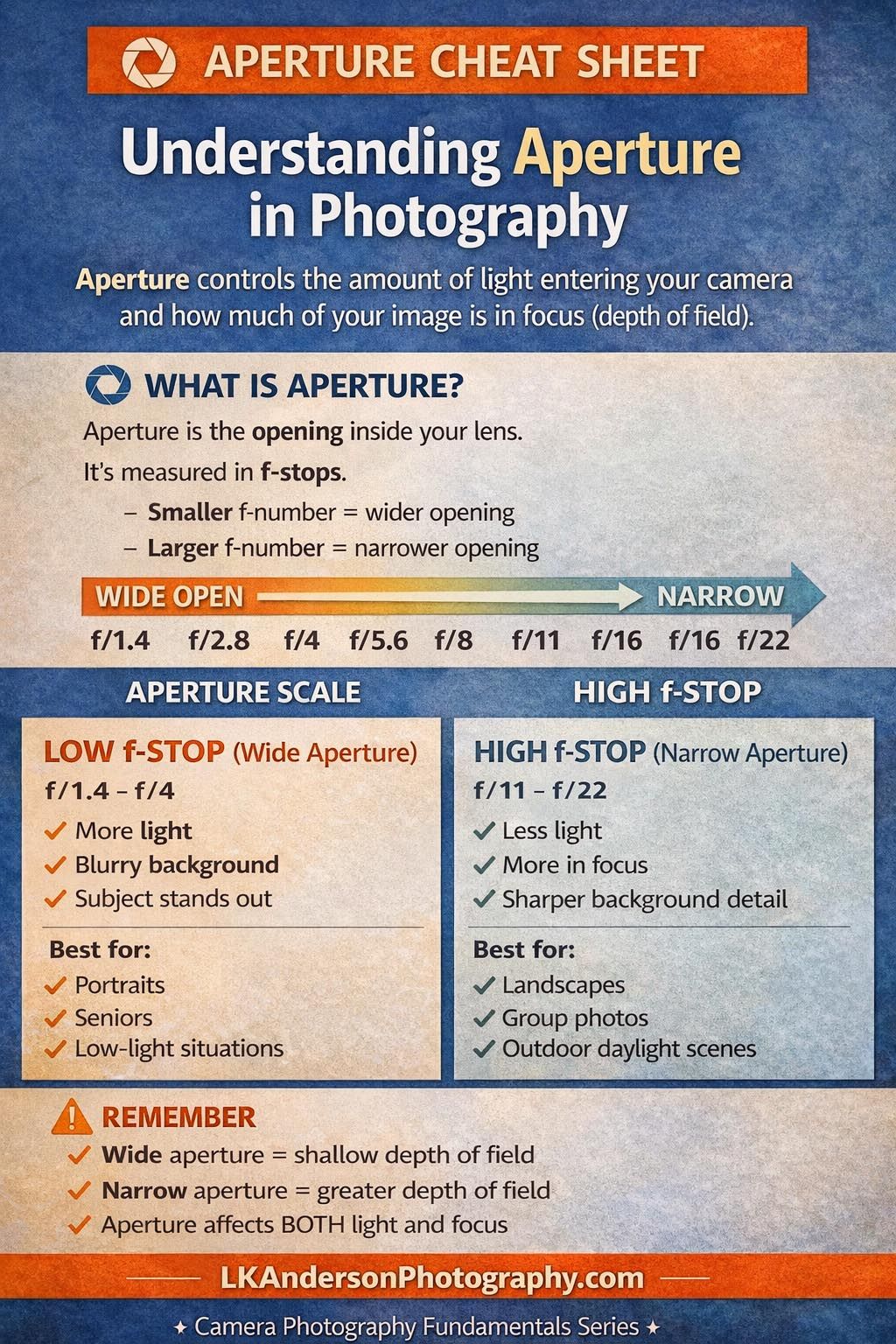
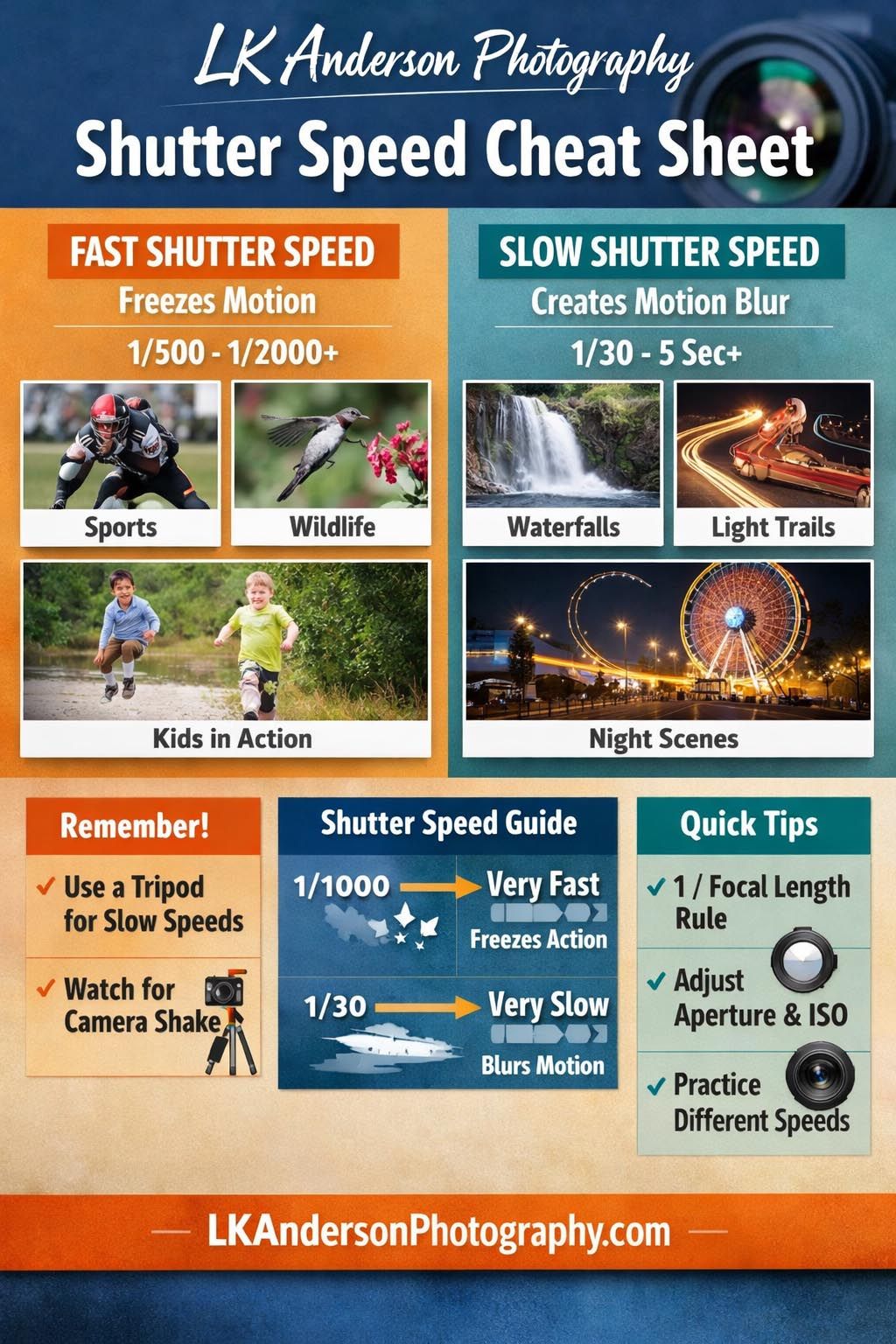
In the first post, we covered aperture and how it controls light and depth. In Part 2, we explored shutter speed and how it freezes or shows motion. Now it’s time to bring everything together with the final piece of the exposure triangle: ISO.
ISO is often misunderstood, but once you learn how and when to adjust it, your confidence behind the camera will grow tremendously—especially in challenging lighting situations.
What Is ISO?
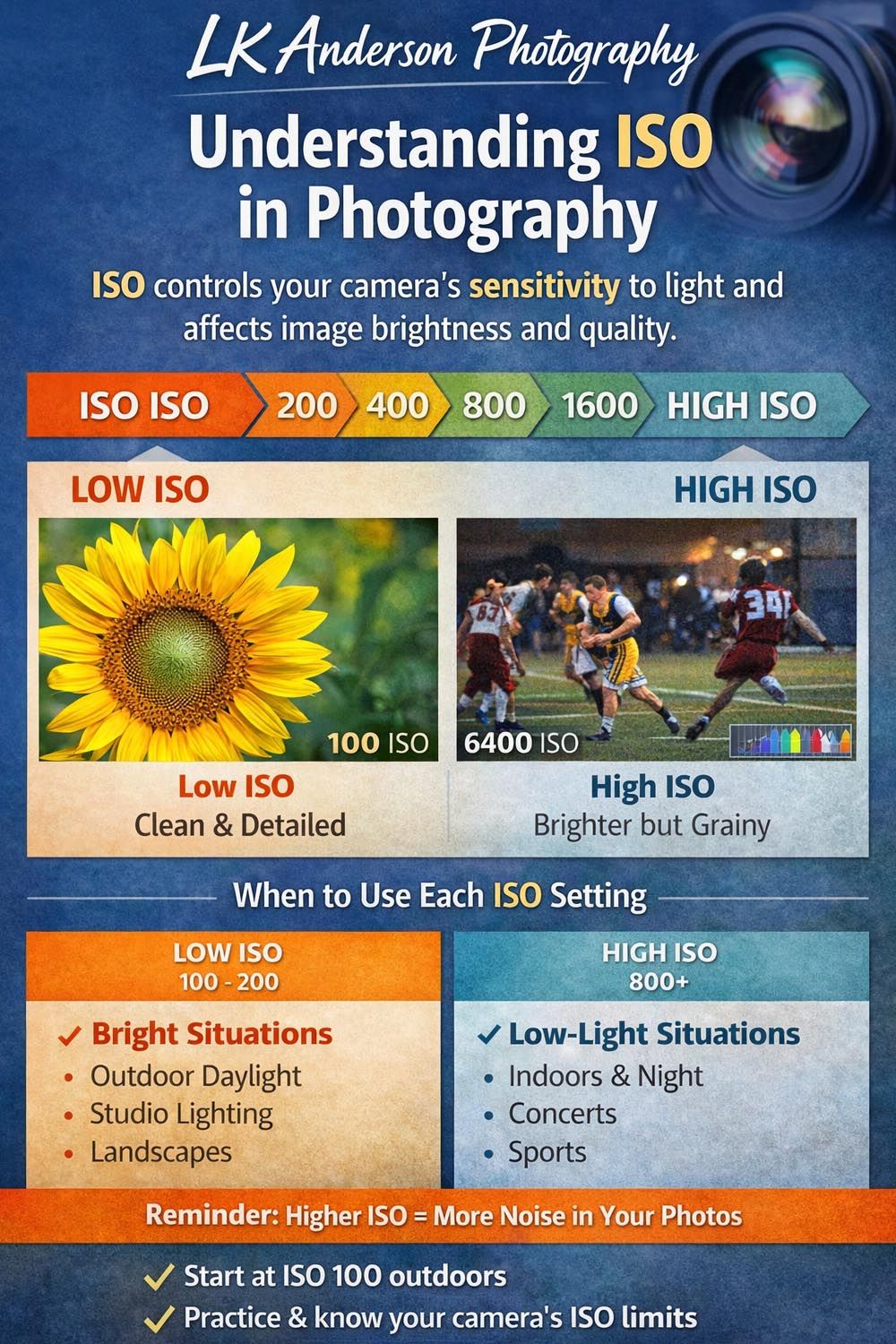
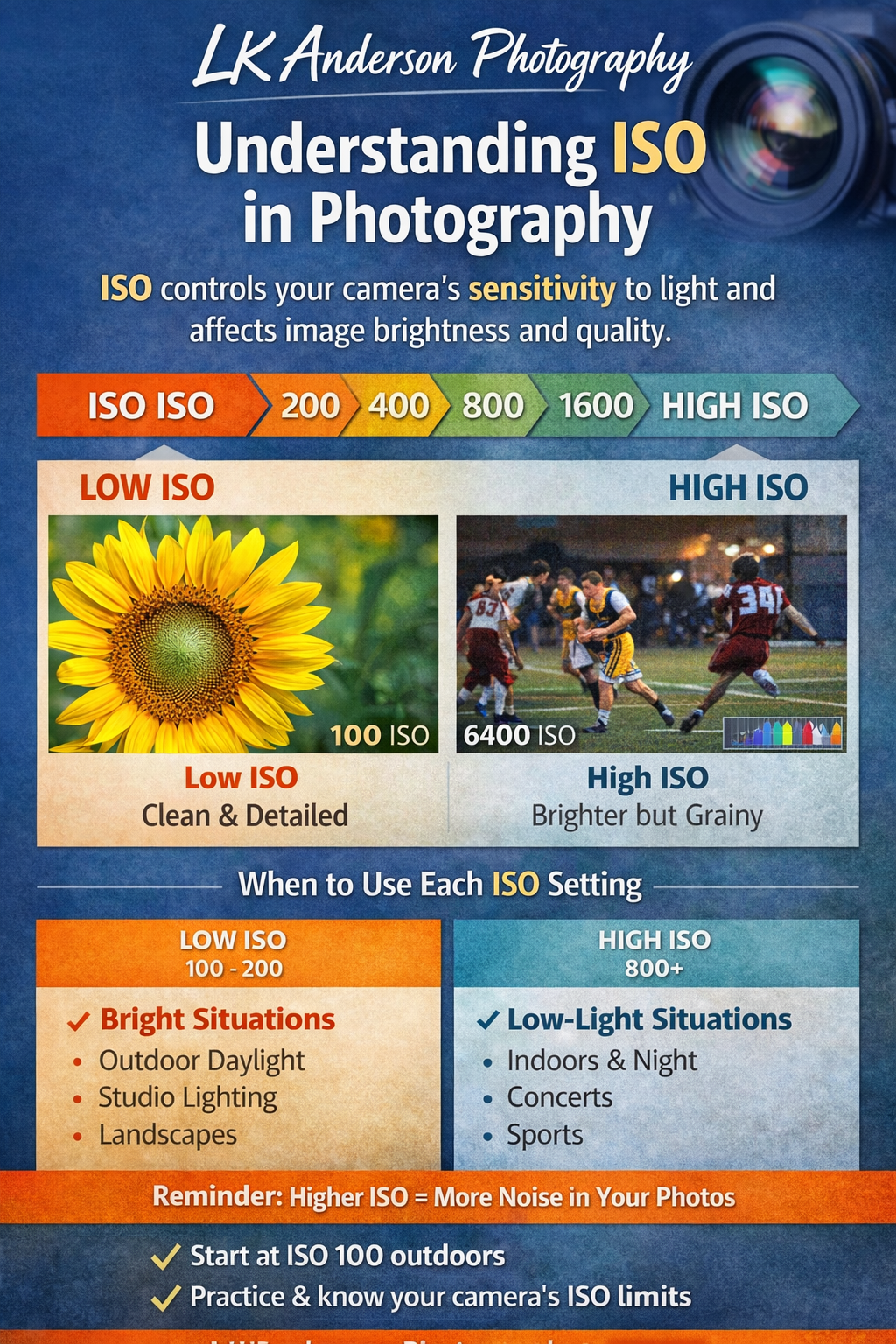
ISO controls your camera sensor’s sensitivity to light.
In simple terms, it tells your camera how bright or dark an image should be based on the available light.
Common ISO values include:
- ISO 100
- ISO 200
- ISO 400
- ISO 800
- ISO 1600
- ISO 3200 and higher
A lower ISO means less sensitivity to light.
A higher ISO means more sensitivity to light.
ISO does not add light—it amplifies the light that is already there.
How ISO Affects Image Quality
One of the most important things to understand about ISO is its effect on image quality.
Low ISO (100–200):
- Clean images
- Sharp details
- Minimal grain or noise
High ISO (1600+):
- Brighter images in low light
- More visible grain (noise)
- Slight loss of detail
Noise isn’t always bad, but knowing when to push ISO—and when not to—is key.
When to Use a Low ISO
Low ISO works best when you have plenty of light.
Use a low ISO when:
- Shooting outdoors during the day
- Working with studio or natural window light
- Photographing landscapes
- Taking portraits where detail and clarity matter
I typically start at ISO 100 whenever possible. This gives the cleanest image and the most flexibility in editing later.
ISO and Noise: Don’t Be Afraid of It
Many photographers are afraid of high ISO, but modern cameras handle noise much better than they used to.
A slightly grainy image is always better than:
- A blurry photo
- A missed moment
- An underexposed image that can’t be recovered
The key is finding the balance between brightness and image quality.
How ISO Works with Aperture and Shutter Speed
ISO works hand-in-hand with aperture and shutter speed. When light is limited, adjusting ISO helps maintain proper exposure without sacrificing motion or depth.
Here’s how they work together:
- If you need a fast shutter speed but don’t have enough light → raise ISO
- If your aperture is already wide open and the image is still dark → raise ISO
- If you have plenty of light → keep ISO low
- Understanding this balance gives you full control over your camera.
Practice Tip: Learn Your Camera’s ISO Limits
Every camera handles ISO differently.
Spend time learning how far you can push your ISO before noise becomes noticeable or distracting.
Try this:
- Take the same photo at different ISO levels
- Compare them on your computer
- Find the highest ISO you’re comfortable using
That number becomes a powerful tool in real-world shooting situations.
Final Thoughts: Putting It All Together
ISO completes the exposure triangle.
When you understand how aperture, shutter speed, and ISO work together, photography stops feeling overwhelming and starts feeling intentional.
These three settings give you creative freedom. They help you adapt to light, movement, and environment while still capturing meaningful moments.
If you’re just starting out, take your time. Practice often. And remember—confidence behind the camera comes from understanding the basics and trusting yourself to use them.
Make sure and checkout the full Series
Camera Photography Fundamentals Series
Part 1: Understanding Aperture
Part 2: Understanding Shutter Speed
Part 3: Understanding ISO